

MAIN TECHNICAL ARTICLE
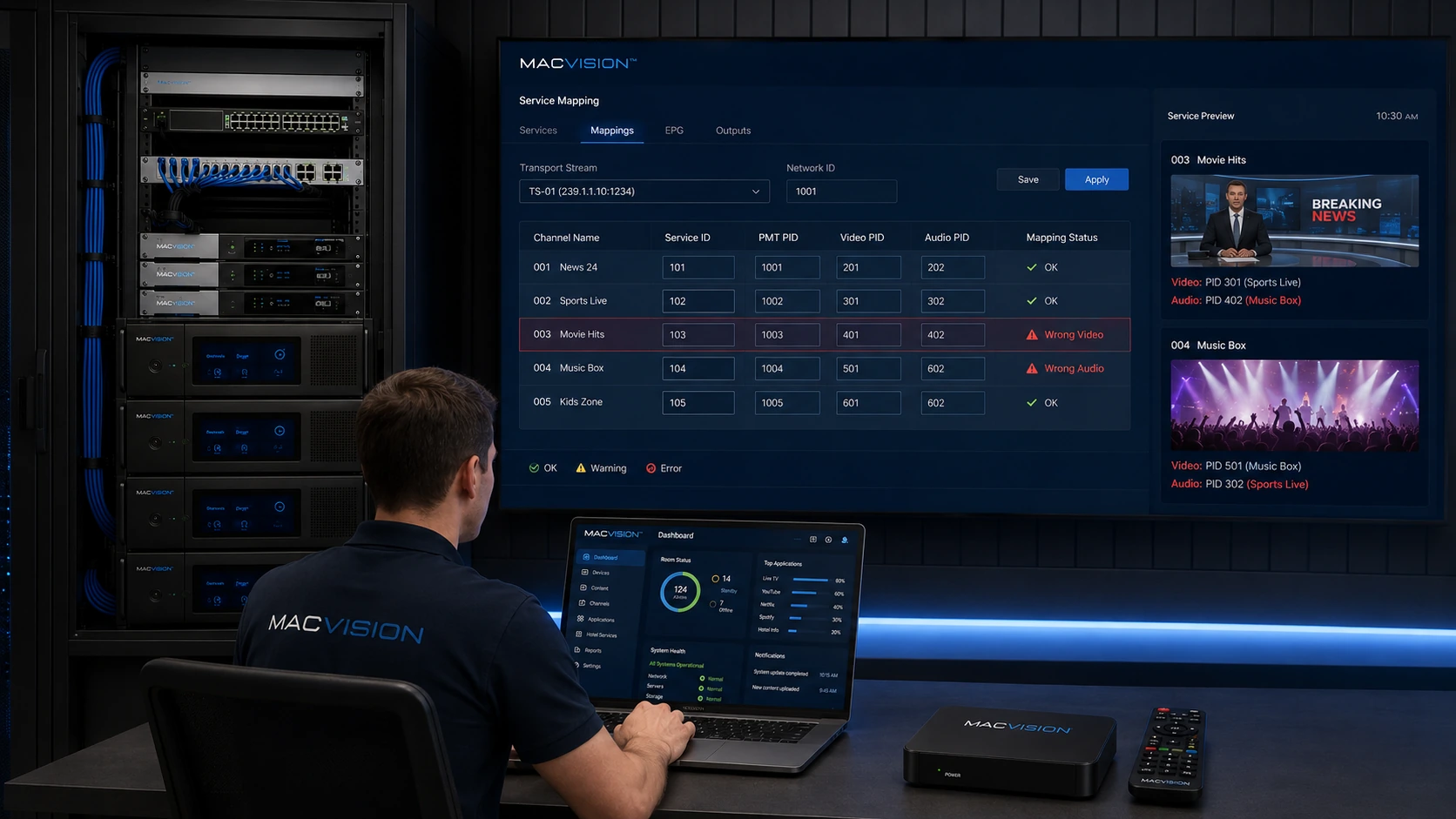
A transport stream contains multiple programs identified by service IDs, with separate video, audio, PCR, subtitle and data PIDs. If the headend selects the wrong service or manually maps incorrect PIDs, a channel can show another program, black video, silent audio, wrong language or unstable timing. PID changes by the broadcaster can also break a previously working manual configuration. Service-aware selection is safer than fixed PID entry when the platform supports it.
Why can an IPTV channel show the correct name but play a different program?
Answer: The middleware name may be attached to an output multicast address while the headend output is sourcing the wrong service ID. This often happens after a transponder rescan, service reorder or manual PID entry. Compare the output program number and service name with the satellite service information. Correct the source mapping while retaining the existing multicast IP and channel number. Also check for duplicate channel records that point to the same output stream.
What happens when the video, audio or PCR PID is configured incorrectly?
Answer: A wrong video PID can produce black screen or another program's picture. A wrong audio PID can create silence or the wrong language. An incorrect PCR reference causes timing instability, lip-sync errors or decoder failure even when audio and video PIDs are correct. Use a transport-stream analyzer to inspect the program map table and select the PIDs associated with the intended service. Avoid mixing PIDs from different programs unless the headend is deliberately remultiplexing and regenerating valid timing tables.
How should PID changes be handled after a broadcaster updates a service?
Answer: Rescan or refresh the service information on a test tuner, compare the old and new PMT, and verify all required components. Where possible, configure the gateway to follow the service ID and PMT automatically. If manual mapping is necessary, update video, audio, PCR, subtitle and conditional-access references together. Test the service through the final TV models before publishing. Keep the output multicast address and middleware channel identity unchanged so the update remains transparent to viewers.