

MAIN TECHNICAL ARTICLE
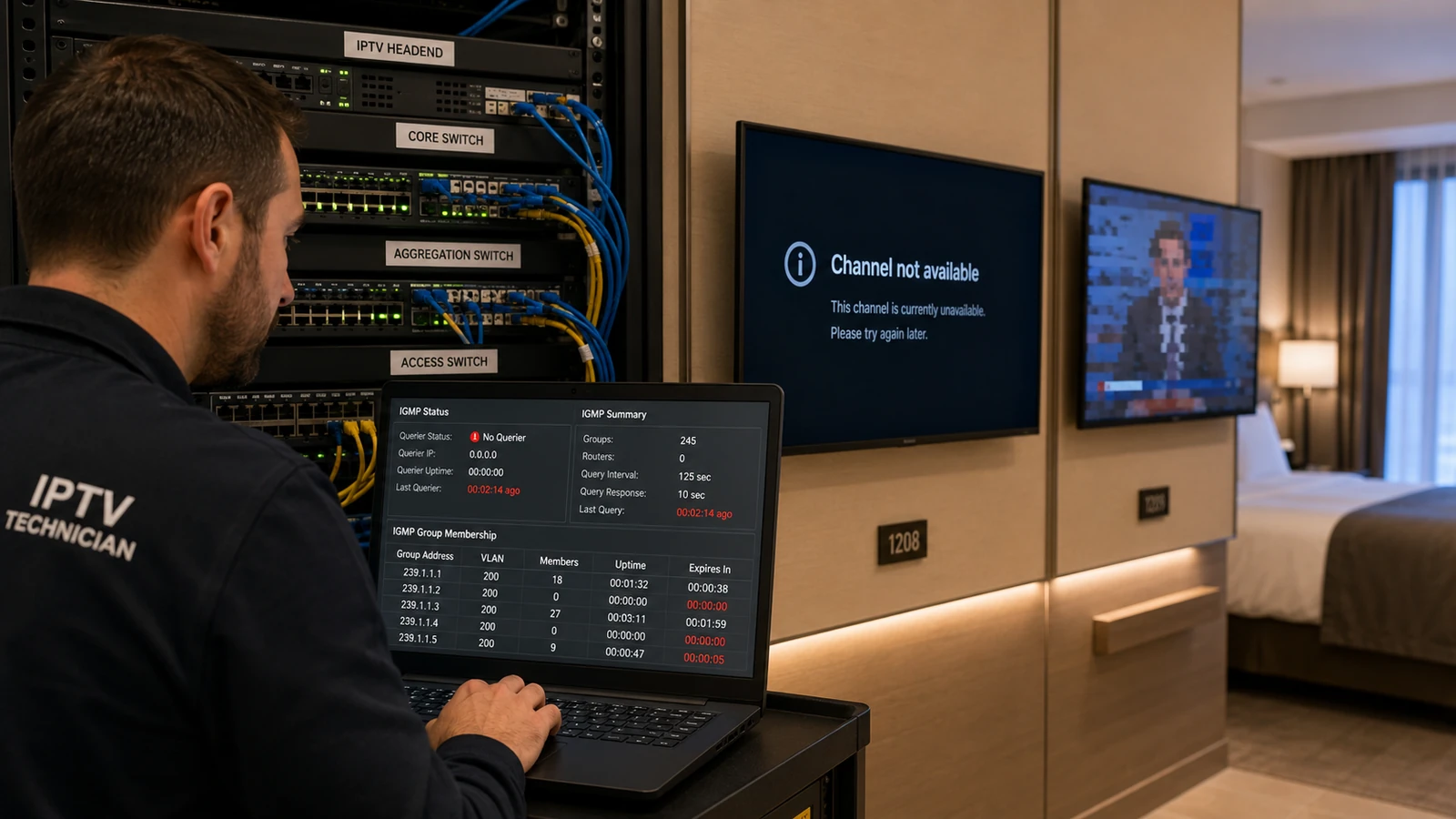
IGMP snooping switches need membership reports to maintain forwarding tables. An IGMP querier periodically asks hosts which groups they still require. If no querier exists, learned entries can expire and channels may stop after a period. Multiple improperly configured queriers can also create unstable behavior, especially across VLANs. The querier role should be deliberate, reachable and consistent with the IGMP version used by endpoints.
Why do IPTV channels play for a few minutes and then stop?
Answer: A snooping switch may initially learn the group from the TV's join report, but without periodic queries the membership timer expires. The switch then removes the forwarding entry and the stream disappears even though the TV still expects it. Changing channels creates a new report and temporarily restores service. Check query packets in the VLAN and the switch group table over time. Configure one reliable querier or multicast-capable gateway for that subnet.
Can more than one IGMP querier exist on the same IPTV VLAN?
Answer: Querier election can select one active device when implementations are compatible, but accidental multiple configurations increase complexity and may use different timer or version settings. A device with the lowest address often wins, which may not be the intended core switch. Document the designated querier and verify election results. Remove unnecessary querier functions or align their settings so a failover does not change behavior unexpectedly.
How should querier intervals and membership timers be set for hotel IPTV?
Answer: Use standards-based defaults unless a measured requirement justifies change. Very long timers leave unused streams forwarding after channel changes, while very short timers can remove groups when a TV or network is briefly busy. Ensure endpoint response times fit within the query interval and test rapid channel changes, TV sleep and wake, and switch failover. Consistency across the VLAN is more important than aggressive tuning.