

MAIN TECHNICAL ARTICLE
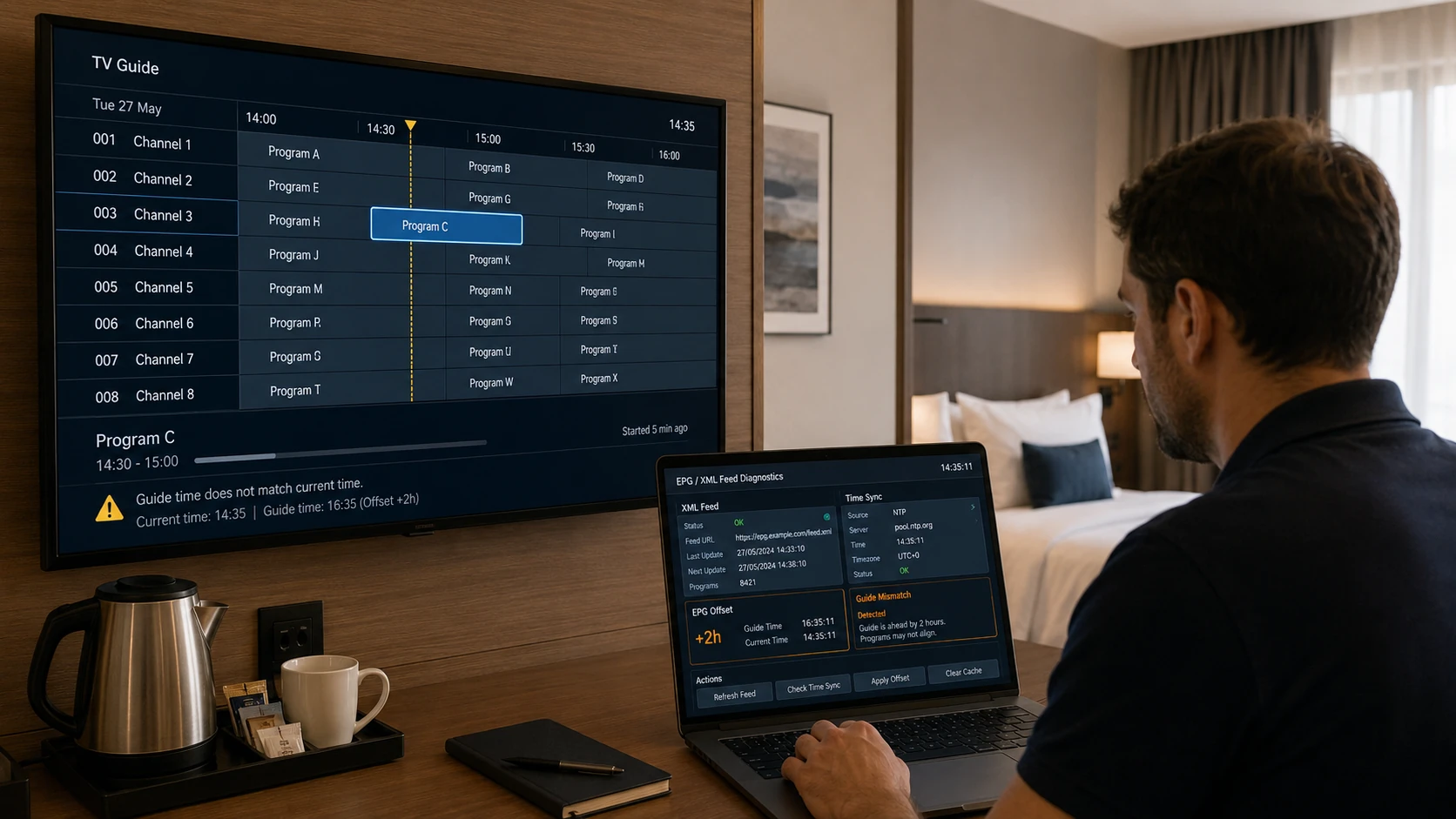
EPG data is matched to channels using provider identifiers, XMLTV IDs, service IDs or manual mappings. If the wrong identifier, timezone or schedule source is applied, the guide can show another channel's programs, shifted times or no information. The stream itself may be correct. EPG correction requires validating identity, time base and update schedule independently from video delivery.
Why does the guide show programs from a different IPTV channel?
Answer: The middleware channel may be linked to the wrong EPG source ID, often after a channel rename, transponder migration or bulk import. Compare the channel's internal ID and source service with the EPG provider mapping. Do not match only by display name because regional versions can share similar names. Correct the mapping and rebuild the guide cache while preserving the channel's media URL.
What causes all EPG programs to appear one or several hours early?
Answer: The data source may use UTC while middleware applies the wrong local timezone or daylight-saving rule. Server, database and TV clocks may also disagree. Inspect the raw event time, timezone metadata and the final displayed time. Use synchronized NTP and one documented conversion policy. Saudi Arabia does not use seasonal daylight-saving changes, so an imported DST rule can create periodic shifts.
How should EPG reliability be monitored?
Answer: Track successful feed downloads, parse errors, event counts, time coverage and channel-match rates. Alert when future schedule depth falls below a threshold or when a source stops updating. Test Arabic and English titles, long descriptions and special characters. Keep a manual fallback message for channels without guide data, but do not duplicate old events because stale program information is more misleading than an explicit unavailable status.