

MAIN TECHNICAL ARTICLE
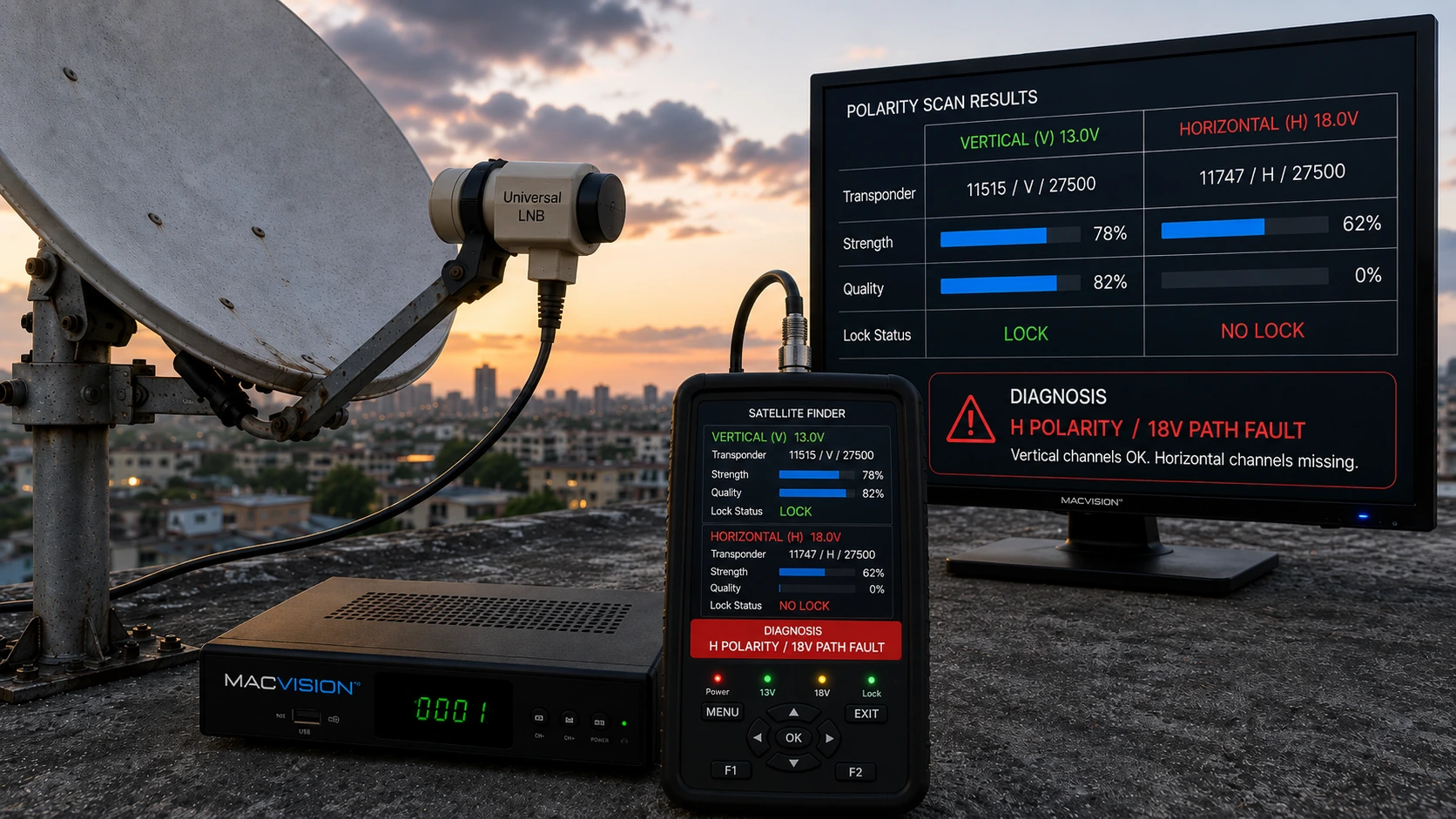
Universal and conventional satellite systems select polarization by changing the DC voltage supplied to the LNB or multiswitch input. Approximately 13 V selects vertical polarization and approximately 18 V selects horizontal polarization. If vertical services work but all horizontal services are absent, the fault is usually in voltage generation, voltage drop, DC-blocking components, a multiswitch quadrant, cable resistance or an incorrect tuner configuration. The pattern is highly diagnostic because it affects channels by polarization rather than by middleware category or television model.
What causes all horizontal channels to disappear while vertical channels remain available?
Answer: The most common cause is failure of the 18 V selection path. The headend tuner may not generate the required voltage, a long or damaged coaxial cable may drop the voltage, a splitter may block DC, or the horizontal input of a multiswitch may be disconnected or defective. Incorrect LNB power settings can create the same result. Verify that the missing channels really share horizontal polarity, then measure voltage at the tuner output, multiswitch ports and LNB under load rather than relying on an unloaded reading.
How can a technician distinguish an 18 V switching fault from a bad LNB?
Answer: Connect a meter or known-good receiver directly to the LNB and tune a horizontal transponder. If horizontal lock returns, the LNB is likely serviceable and the fault is in the original tuner, cable or multiswitch path. If it still fails, measure the voltage at the LNB connector while tuned to horizontal. A correct voltage with no horizontal reception points toward the LNB or dish/skew; a low voltage points toward excessive cable resistance, connector loss or a weak power supply. Testing a known-good LNB provides final confirmation.
How should a vertical-only satellite reception problem be permanently corrected?
Answer: Repair the voltage-selection path rather than manually forcing a temporary setting. Replace corroded connectors, DC-blocking splitters, damaged coax or the failed multiswitch module. Confirm that each headend tuner is configured to supply LNB power only where the design requires it, because multiple supplies can conflict. After repair, test horizontal low-band and horizontal high-band transponders at the headend and verify stable MER and BER. Update cable and port labels so the correct horizontal quadrant can be identified quickly during future faults.