

MAIN TECHNICAL ARTICLE
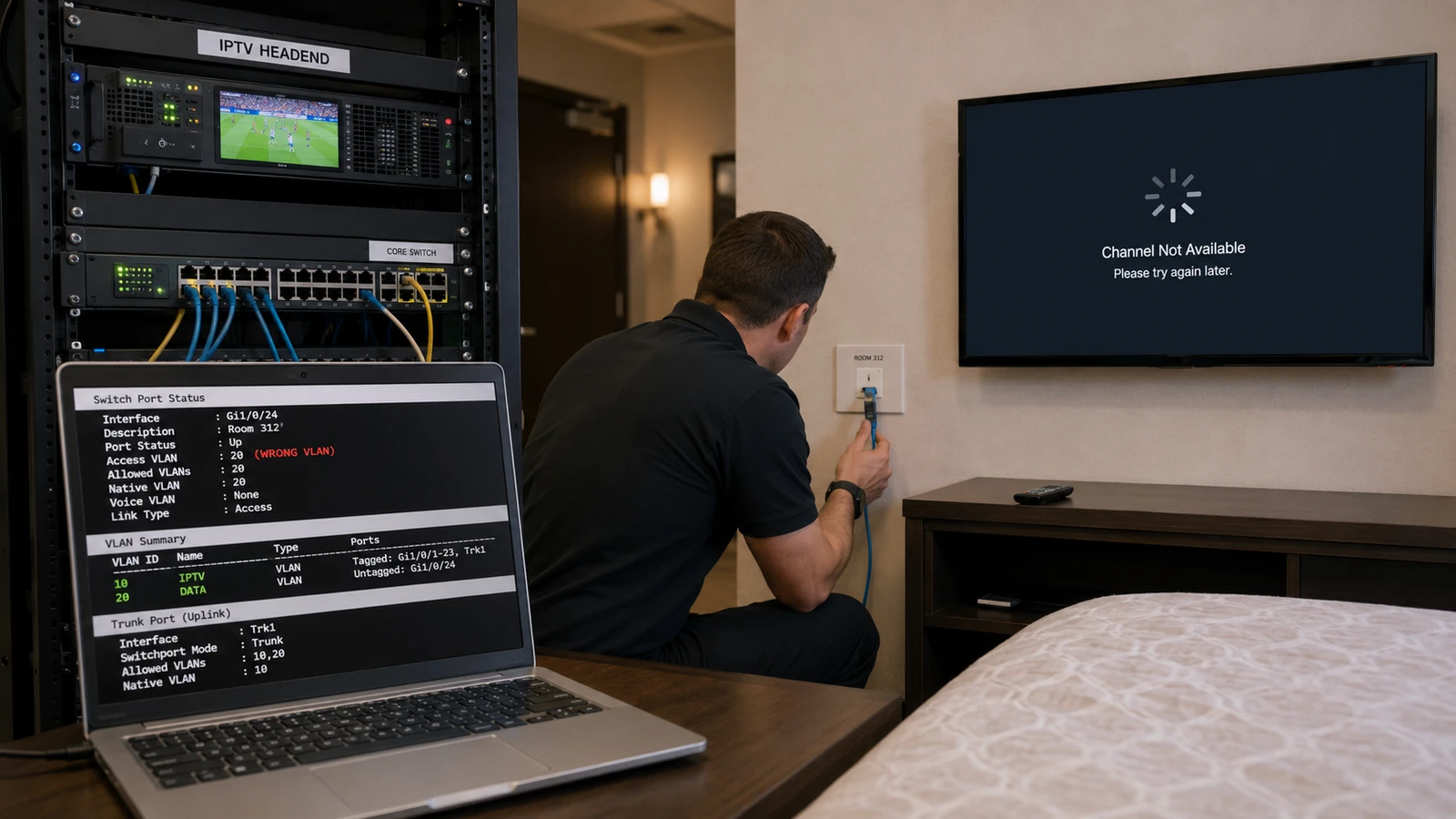
VLANs separate IPTV traffic from other hotel services, but incorrect tagging, native VLAN selection, trunk permissions or access-port assignment can prevent a television from reaching middleware or receiving multicast. A device may obtain an IP address yet remain in the wrong broadcast domain, or control traffic may work while media traffic is filtered. Troubleshooting must compare the complete path from headend to endpoint rather than checking only the final port.
Why can a TV open the middleware interface but fail to play live IPTV channels?
Answer: The control application may be reachable through a management or guest VLAN while multicast media is assigned to a different VLAN not allowed on the trunk or TV port. The middleware can therefore load channel names and logos but the stream never arrives. Verify the TV's untagged and tagged VLAN behavior, switch port configuration and multicast VLAN membership. Capture the channel join and check whether it enters the correct VLAN.
What is the difference between an access-port and trunk mismatch in IPTV?
Answer: An access port presents one untagged VLAN to a device. A trunk carries multiple tagged VLANs and may include one native untagged VLAN. If a normal TV is connected to a trunk without understanding tags, it may fail DHCP or join the wrong network. If an uplink is configured as access, required IPTV VLAN tags are removed or blocked. Compare configurations at both ends; a trunk must agree on allowed VLANs and native VLAN expectations.
How should VLAN changes be tested before applying them to every hotel room?
Answer: Use a pilot switch and representative TV, STB and middleware session. Verify DHCP, DNS, application access, multicast join and leave, channel switching, casting or internet features and management access. Check isolation and security policies as well as video. Apply the configuration through controlled templates and confirm each uplink permits the VLAN. Maintain an out-of-band management path so an incorrect trunk change does not isolate the entire floor.