

MAIN TECHNICAL ARTICLE
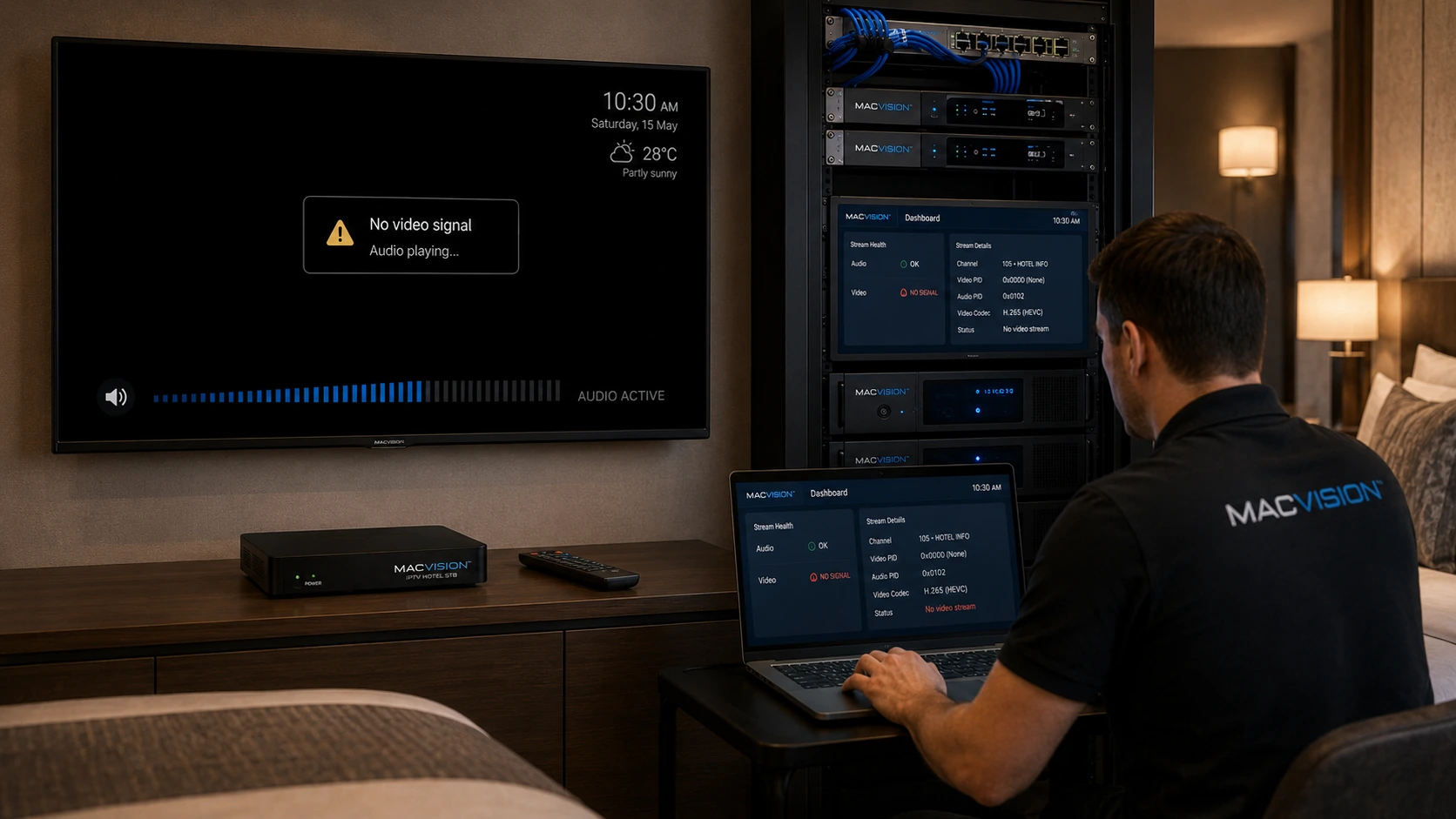
A black picture with normal audio indicates that the channel session and at least one audio stream are reaching the endpoint. The video may be absent, encrypted, mapped to the wrong PID, encoded in an unsupported format or rejected by the TV decoder. HDCP or DRM restrictions can also block certain sources. The fastest diagnosis is to inspect the program map and decode the same stream with a known-compatible reference player while preserving the original multicast path.
What are the most common causes of black video with working IPTV audio?
Answer: The selected service may have no valid video PID, the headend may map the wrong PID, or the endpoint may not support the codec, profile, level, chroma format or resolution. A damaged sequence header can prevent decoder initialization, while an encrypted video component may remain scrambled even if audio is clear. Check the PMT, codec identification and conditional-access status. A black screen on only one TV model strongly suggests endpoint compatibility; a black screen everywhere points upstream.
How can unsupported video codec be confirmed on LG, Samsung or Android endpoints?
Answer: Play the stream on a professional analyzer or reference decoder and record codec, profile, level, resolution, frame rate and bit depth. Compare those values with the endpoint specifications and test a known-supported sample on the same network. If transcoding the channel to a standard H.264 profile restores video without changing audio or multicast delivery, codec compatibility is confirmed. Avoid relying only on file-playback specifications because live multicast support can differ from USB or application playback support.
How should a black-screen channel be corrected without changing its channel number?
Answer: Fix the video source or transcode it to a format supported across the installed device estate. Correct the video and PCR mappings, ensure the stream begins with usable codec headers and verify encryption authorization. Keep the existing multicast IP, port and middleware channel ID so the guest lineup remains unchanged. Test channel start, channel switching and recovery after TV restart, because a stream that plays after manual refresh may still lack proper initialization for normal operation.